
Mound and Raised Septic Systems in Tallahassee FL
When the ground is too wet, too shallow or too clay-heavy for a normal drainfield, the state has other designs. A mound is the best known. Here is when it applies and what to ask.
- Soil limits explained
- Water-table math
- Stabilization duty
- Local lot types
✓ Licensed and insured. Many years in business serving the greater Tallahassee area.
What a mound is for
A mound lifts the drainfield up and out of trouble.
Florida rule says mound systems are used to overcome limiting conditions: an elevated seasonal high water table, shallow permeable soil over slowly permeable soil, and shallow permeable soil over creviced or porous bedrock (rule text).
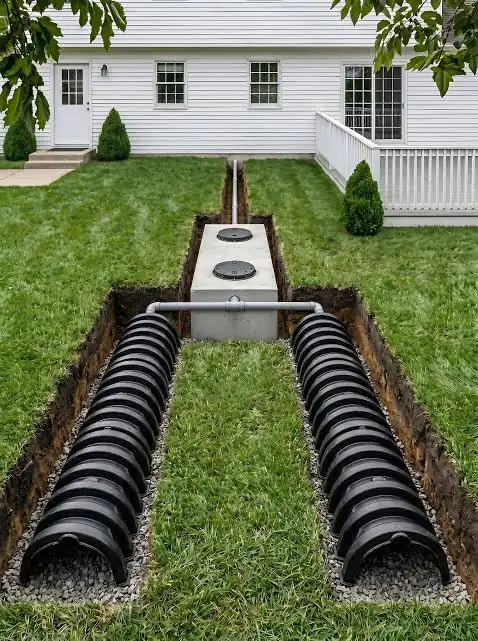
Soils that point to an alternative design
The rule lists clay, bedrock, oolitic limestone, fractured rock, hardpan, organic soil, and gravel or coarse sand with a high water table as severely limited (Rule 62-6.006). Around Tallahassee, clay-dominated hills sit north of the Cody Scarp and flat karst and sandy ground to the south (Wikipedia).
- North of the scarp: slow clay, shallow fields
- South of the scarp: fast sand, high water table in wet years
- Near lakes and ravines: extra setbacks
What to ask before you sign
- Which limit is the problem? Soil, water table or bedrock. The answer sets the design.
- What happens after the build? A mound must settle and be stabilized. The contractor is responsible unless the contract says you are (rule text).
- Is there a pump? Most raised systems need one. Ask who services it.
- Is this also a springs lot? If so, you may need nitrogen-reducing on top.
Related pages
Start with site evaluation and permits, then see drainfield installation.
Mound system questions
What is a mound system?
A raised drainfield built above the natural ground. Florida's rule says mounds overcome limiting conditions such as a high seasonal water table, shallow permeable soil over slowly permeable soil, or shallow soil over creviced or porous bedrock (rule text).
When is a conventional system not allowed?
When the soil is severely limited, such as clay, bedrock, oolitic limestone, fractured rock, hardpan or organic soil (Rule 62-6.006).
How high does the water table have to be below the field?
At least 24 inches below the bottom of the drainfield in the wettest season (rule text).
Who is responsible for stabilizing a mound?
The septic contractor who built it, unless the written agreement says the owner is (rule text).
Is a mound the same as a nitrogen-reducing system?
No. A mound solves soil and water-table problems. Nitrogen reduction solves a springs problem. Some lots need both. See our page on them.
Where in Tallahassee might a mound be needed?
Clay-heavy lots north of the Cody Scarp and low sandy lots with a high water table are the usual candidates. A site check tells you which applies.
Wet or clay-heavy lot?
Send your address. We will tell you what the soil and water table mean. Back to the home page.