
Septic Tank Installation: New Septic Systems in Tallahassee FL
Septic system installation covers more than the tank. We plan the whole thing: tank, lines, drainfield and the permit that goes with them, matched to your lot and your soil.
- New builds and vacant lots
- Conventional and nitrogen-reducing
- Permit paperwork explained
- Installed to the approved plan
✓ Licensed and insured. Many years in business serving the greater Tallahassee area.
When you need a new septic system
You need septic tank installation when a lot has no working system and no sewer line to connect to.
- A vacant lot you plan to build on
- A new home outside the sewer service area
- A house whose old system was never permitted or cannot be found
- A property where sewer exists but is not yet at your street
Before you decide, ask whether sewer is available. If it is, connecting may be required or cheaper. If not, septic is the path. When sewer comes later, septic abandonment closes out the old tank.
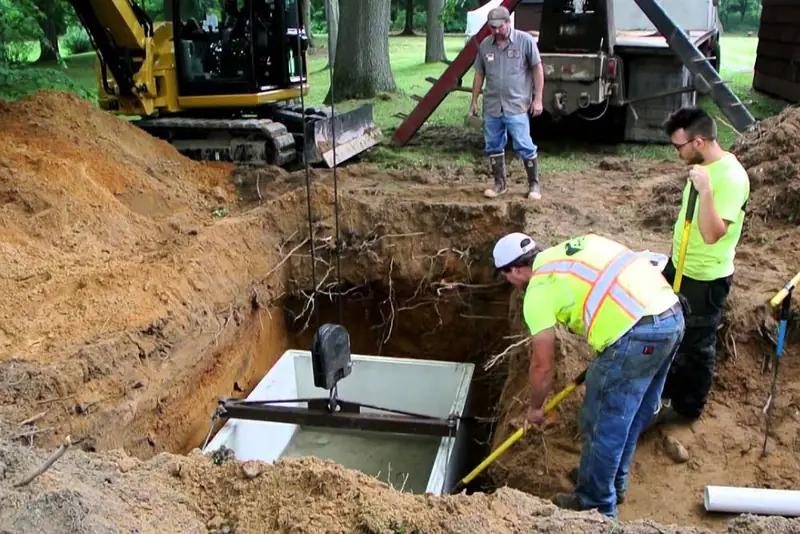
What goes into a septic system
The tank
Wastewater settles here. Solids sink, scum floats and clearer liquid moves on.
The drainfield
Liquid soaks into soil here. Its size depends on the soil and the water table. See drainfield installation.
The treatment step
Springs areas add one to cut nitrogen. See nitrogen-reducing systems.
The rules a design has to meet
These come from Florida code and state records. Your site plan shows the exact numbers for your lot.
| Rule | What it says | Source |
|---|---|---|
| Water table gap | At least 24 inches between the bottom of the drainfield and the wettest-season water table | Rule text |
| Private well | 75 foot setback to a private potable well | FDEP summary |
| Trench spacing | At least 24 inches between trench sidewalls | FDEP-posted manual |
| Water lines | Keep water lines at least 24 inches from the system, with sleeving or backflow devices where needed | Rule text |
| Room to repair | At least 75 percent of the unobstructed area must meet setbacks so the field can be repaired or expanded | Rule text |
| Springs basins | New systems on lots of one acre or less need nitrogen-reducing where sewer is not available | FDEP fact sheet |
How septic tank installation works, step by step
- Site check. We walk the lot and mark the house, wells, slopes, trees and wet spots.
- Soil and water-table readings. These decide the drainfield size and type.
- Design and application. A site plan, floor plan and application go to the permitting office.
- Permit approval. Nothing gets dug until the permit is in hand.
- Excavate and set the tank. The tank goes on a prepared base and lines are connected.
- Build the drainfield. Trenches or a bed are built without compacting or smearing the soil.
- Inspection. The system is inspected before it is covered.
- Backfill and grade. The yard is graded so water runs away from the field.
The state says soil in drainfield trenches should not be smeared or compacted (FDEP-posted manual). That one detail is why trucks and heavy tools stay off the field.
What drives septic installation cost
- System type: conventional or nitrogen-reducing
- Soil and water table, which set drainfield size
- Lot size and how far the house is from the field
- Pumps or lift stations if the lot slopes the wrong way
- Permit and site-evaluation fees
- Access for equipment and tree removal
For dollar figures and sources, see the septic cost guide.
What can go wrong
- Water table measured in the dry season, not the wet one
- Soil smeared or compacted during digging
- Heavy vehicles parked on the field
- Setbacks missed to wells, water lines or property lines
- Covered before the inspection
Where we do this work
See how the ground and rules change by town on our locations page.
Septic Tank Installation questions
How long does septic tank installation take?
The dig itself is short. Most of the schedule is the site check, soil readings and permit. We give a timeline after we see your lot.
Can I install a septic tank myself?
Septic work is done under a state permit by a registered contractor. Homeowners can check any installer on the Florida Health contractor list.
What if my lot is under one acre?
In a springs basin, a new system on a lot of one acre or less must be nitrogen-reducing when sewer is not available (FDEP). Outside those basins other rules apply.
Do I need a perc test?
Florida bases the design on soil and wet-season water table checks done at your site, not a single quick test. See our site evaluation page.
How close can a tank or drainfield be to a well?
The state's records list a 75 foot setback to a private drinking-water well (FDEP summary). Your site plan shows the exact numbers.
What is the difference between a new system and a replacement?
A new system goes where none has been before, which triggers the strictest rules. Replacement follows the standards in effect at the time (FDEP). See septic tank replacement.
Start with a site check
Send your address and what you are building. Back to our home page any time.