
Septic Tank Installation: Drainfield Installation and Replacement in Tallahassee FL
The drain field (also called a leach field) is where your septic system finishes the job. When it clogs or sits in water, everything backs up. We build and replace drainfields to current Florida standards.
- New and replacement drainfields
- Soil and water-table checks first
- Springs-basin upgrades when required
- Clean grading afterward
✓ Licensed and insured. Many years in business serving the greater Tallahassee area.
When a drainfield needs to be rebuilt
A drainfield can look fine for years and then fail fast, usually after a wet season.
- Spongy or soggy ground over the lines
- Slow drains and gurgling in the house
- Sewage smell in the yard
- Green stripes of grass above the trenches
- Backups after heavy rain
First, have the tank checked. If the tank is the problem, see septic tank replacement. If the field is the problem, read on.
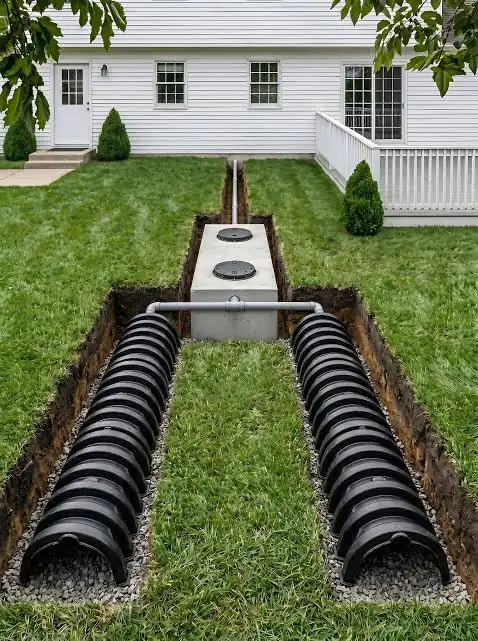
Trench, bed or something else?
Trenches
Narrow lines with at least 24 inches between sidewalls (FDEP-posted manual). Good on lots with room and decent soil.
Bed
One wide area instead of separate trenches. Useful when width is limited.
Alternative systems
Raised or specially approved designs for tough sites. Ask about nitrogen-reducing systems too.
How a drainfield replacement goes
- Find the cause. We check the tank, the pump if there is one, the distribution box and the field.
- Measure the site. Soil and wet-season water table are measured again, because they may have changed.
- Permit. A replacement needs its own permit.
- Remove or abandon the old field. The permit sets how.
- Build the new field. Soil is kept loose and uncompacted around the new lines.
- Inspect and grade. The field is inspected before it is covered.
What drives drainfield cost
- Soil type and how fast it drains
- Wet-season water table, which can force a raised design
- System type, including nitrogen-reducing
- Lot size and tree removal
- Access for equipment
- Permit and site-evaluation fees
See the cost guide for sourced numbers and incentives.
Care after the install
- Keep cars and heavy equipment off the field
- Keep tree roots away
- Spread out laundry over the week
- Pump the tank on schedule
- Keep records of the permit and inspection
Where we do this work
Low, wet and sandy ground shows up in these areas. See the locations page. Back to the home page.
Drainfield questions
What are the signs of a failing drainfield?
Soggy or spongy ground over the field, slow drains inside, gurgling pipes, sewage smell outdoors or bright green strips of grass over the lines.
Can a drainfield be repaired instead of replaced?
Sometimes. If the problem is a broken pipe or a blocked line, a repair may work. If the soil has clogged or the water table has risen, the field has to be rebuilt to current standards.
What standard does a replacement drainfield have to meet?
When a system fails, the drainfield is replaced with one that meets standards for new systems in effect at that time (FDEP summary).
Does a replacement in the Wakulla Springs area need an upgrade?
In Wakulla County's priority focus area, repairs and modifications must go nitrogen-reducing, starting May 1, 2024 (Wakulla County).
How much room does a drainfield need?
It depends on soil and house size. The state also wants 75 percent of the open area kept clear of setback conflicts for future repair (rule text).
Can I drive or park over the drainfield?
No. Weight compacts soil and crushes lines. Compaction is one of the things installers work to avoid (FDEP-posted manual).
Soggy yard? Let us look
Send the address and what you are seeing, and we will tell you what to check.