
Septic Tank Size and Types in Florida
Tank size is not a guess. Florida sets minimum capacity by bedrooms and building area. Here is how it works, how tank types compare and what to ask your installer.
- Sizing by bedrooms
- Concrete and plastic compared
- Pump-out timing
- Replacement upsizing
✓ Licensed and insured. Many years in business serving the greater Tallahassee area.
How the state sizes a system
The size of the house decides how much wastewater the system must handle.
Florida Administrative Code Rule 62-6.012 has a table that lists minimum required treatment capacity by bedrooms and building area. Homes with 1 or 2 bedrooms up to 1,200 square feet fall in the 400 gallon per day row. A 3-bedroom home of 1,201 to 2,250 square feet is also 400. A 4-bedroom home of 2,251 to 3,300 square feet is 500 (rule text).
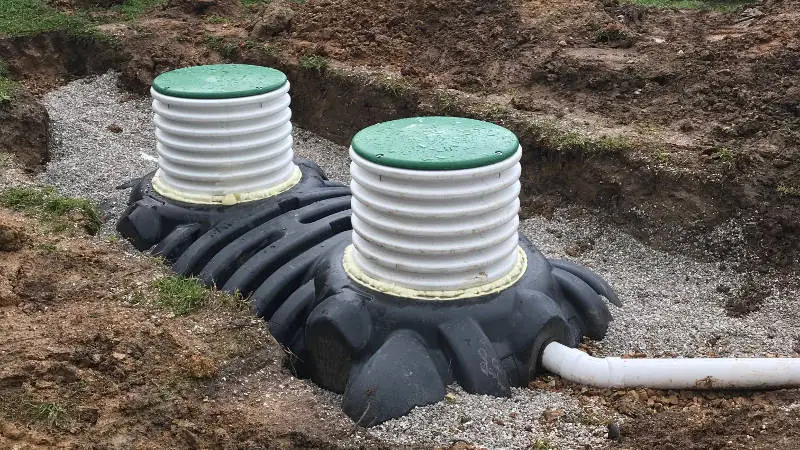
Tank types and what to ask about each
Concrete tanks
Heavy and common. They resist floating in a wet yard. Ask about lid and riser quality and how the tank will be delivered to your lot.
Plastic and fiberglass tanks
Lighter and easier to place where trucks cannot reach. Ask how the installer will hold them down in a high water table.
Treatment units
Powered units used in springs areas. They need electricity and service. See nitrogen-reducing systems.
Care that makes a tank last
- Pump on schedule. UF/IFAS says every three to five years (UF/IFAS).
- Keep records. Save the permit and every service receipt.
- Protect the field. UF/IFAS lists keeping vehicles and structures away from drainfields as a key habit (UF/IFAS recap).
- Watch the water. Fix leaky toilets and spread out laundry loads.
When a bigger tank makes sense and when it does not
- You are adding bedrooms or a guest house
- Your old tank was undersized for the current house
- The permit asks for a larger size after a site check
If your yard is soggy, size is rarely the cause. A site check finds the real reason. Read site evaluation and permits, or see how cost drivers change with size.
Tank size questions
How big does a septic tank have to be in Florida?
The state ties tank size and treatment capacity to the number of bedrooms and the size of the house. If the two do not line up, the rule says the one that gives the larger capacity applies (Rule 62-6.012).
Does a bigger house mean a bigger tank?
Yes. The rule's table steps up as bedrooms and building area go up. A 4-bedroom home of 2,251 to 3,300 square feet falls in the 500 gallon per day row (Rule 62-6.012).
Is concrete or plastic better?
Both are used. The better pick depends on access, soil and cost. Your installer should explain why one fits your site.
How long does a tank last?
UF/IFAS says septic tanks can last up to 30 years with proper maintenance (UF/IFAS).
How often should the tank be pumped?
UF/IFAS says every three to five years (UF/IFAS).
Will a bigger tank fix a soggy drainfield?
Usually not. Soggy ground is a drainfield or water-table problem. See drainfield replacement.
Not sure what size your house needs?
Send your bedroom count and square footage. Back to our home page for all services.